





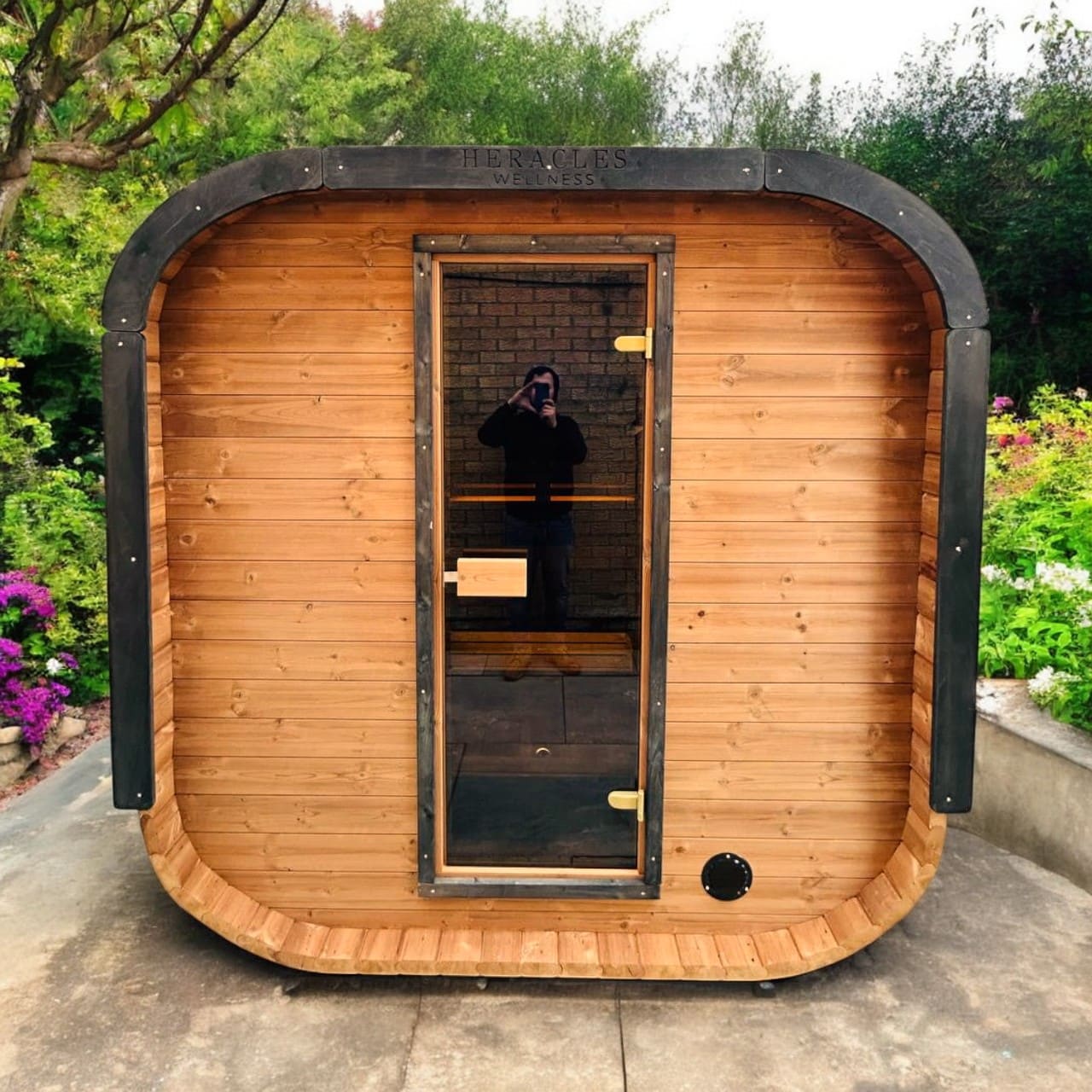
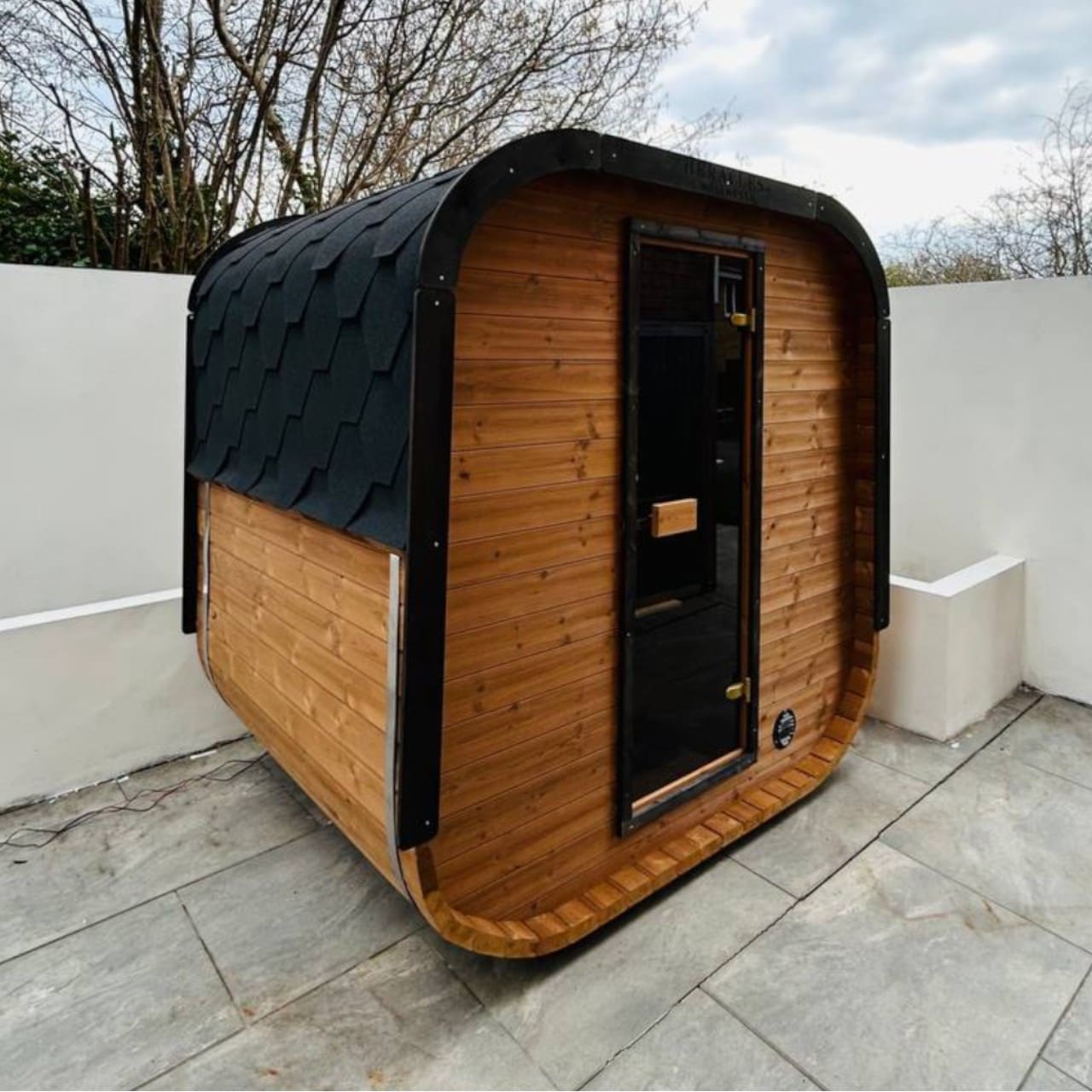







Both a sauna and a hot tub deliver real health benefits through controlled heat exposure, but they do so through different mechanisms. A sauna raises your core temperature by heating the air around you, or in the case of infrared, by heating your body directly with light. A hot tub raises your temperature by submerging you in warm water, using buoyancy, hydrostatic pressure, and water’s superior heat conduction to work on your body in a completely different way.
This difference determines how your muscles and joints respond, what a session costs to run, and what you need to install in your garden or home to make either option work properly.
This guide walks through exactly how each system affects your body, what the research actually shows, and what you need to know about cost, installation, and safety before you buy. By the end, you should know which option fits your goals, your space, and your household.
Key Takeaways
- Saunas raise core temperature through ambient heat, pushing your heart rate up by roughly 30–50%, similar to moderate exercise, while activating heat shock proteins linked to cellular repair.
- Hot tubs raise core temperature through water immersion, which blocks sweat evaporation and produces a stronger, more sustained thermal load with less cardiovascular strain per session.
- Regular sauna use, 4–7 sessions a week, is linked in long-term Finnish cohort studies to a substantially lower risk of fatal cardiovascular events compared with once-weekly use.
- Hot tubs are better suited to joint pain and mobility limitations, because buoyancy removes gravitational load and hydrostatic pressure eases swelling without demanding heat tolerance.
- Running costs, maintenance time, and installation requirements differ sharply between the two, and these practical factors often decide which option gets used consistently for years rather than left idle after the first season.
How Sauna Heat Works on Your Body

Camilla Mini 2 Person Traditional Outdoor Sauna Complete Kit
A sauna session follows a predictable sequence. Ambient heat first raises your skin temperature, and your core temperature follows a few minutes behind. Your heart rate climbs by roughly 30–50% above resting levels, a load broadly comparable to a brisk walk or light jog, as your cardiovascular system works to move blood toward the skin and dissipate heat.
This is the mechanism behind most of what a sauna delivers. Blood vessels dilate to increase circulation, which is what improves blood flow and helps regulate blood pressure over repeated sessions. At the same time, sustained heat exposure activates heat shock proteins, a class of proteins that help repair damaged cells and are thought to play a role in the long-term cardiovascular and longevity benefits associated with frequent sauna use.
Sweating begins within the first few minutes, but the meaningful physiological changes build over the length of the session rather than at the first sign of perspiration. This is why most effective sessions run 15 to 20 minutes: long enough for heart rate, circulation, and heat shock protein activation to build up, without pushing the body into unnecessary strain.
There are different types of saunas:
i. Traditional Saunas:
Traditional saunas heat the air in the cabin rather than heating you directly, typically reaching 70°C to 100°C with humidity held low, around 10-20%. Splashing water on the heated rocks produces a short burst of steam that temporarily raises humidity and intensifies the heat, a practice known in Finnish sauna culture as löyly. Wood-fired or electric heaters can power traditional saunas.
Wood-fired heaters burn logs to heat the rocks and produce a slower, more variable heat with a distinct smell and crackle that many long-term users value as part of the ritual. Electric heaters, on the other hand, warm the same rocks through a heating element, giving more precise, repeatable temperature control and requiring far less hands-on attention per session. Both heat the entire cabin volume, which is why traditional saunas need a properly sized heater and good insulation to perform consistently.
ii. Infrared Saunas
Infrared saunas skip heating the air almost entirely and instead use infrared light to warm your body directly, typically operating at 45°C to 60°C. Because the surrounding air stays far cooler than in a traditional cabin, infrared suits anyone who finds high ambient heat difficult to tolerate, while still delivering a comparable sweat response and circulatory benefit.

Kuro 1-2 Person Full Spectrum Infrared Sauna
The trade-off is a milder cardiovascular stimulus. Infrared heat penetrates tissue directly and takes longer to raise core temperature to the same degree a traditional cabin achieves in a shorter session, so it produces less of the heart-rate elevation associated with the cardiovascular research on traditional sauna bathing. For muscle-level recovery and joint comfort, though, the deeper tissue penetration of infrared wavelengths is a genuine advantage over convective heat.
How Hot Tub Immersion Works on Your Body

Stepping into a hot tub sets off a different chain of events. Warm water, typically held between 37°C and 40°C, immediately begins working on your body through three separate mechanisms rather than heat alone.
-
Vasodilation:
Here, warm water causes blood vessels to widen, improving circulation and helping lower blood pressure, in a pattern similar to the sauna’s effect but achieved through water conduction rather than air temperature.
-
Buoyancy:
The floating removes a significant share of your body weight from your joints, which is why hot tubs are so effective for anyone managing arthritis, stiffness, or general mobility limitations.
-
Hydrostatic pressure
In this case, water applies a gentle, even pressure across the whole body, similar to a compression garment, which supports lymphatic drainage and reduces swelling in the extremities.
Because water conducts heat far more efficiently than air, and immersion stops your body cooling itself through sweat evaporation, a hot tub produces a more sustained thermal load than a sauna at a broadly comparable temperature. Recent research from the University of Oregon surveyed twenty healthy adults tested in a hot tub, a traditional sauna, and a far-infrared sauna, and found that hot water immersion produced the sharpest rise in core temperature and was the only method of the three to produce measurable changes in inflammatory markers.

Equinox EQ130 Lite 4 Person Hot Tub 13 Amp
This gentler cardiovascular profile, combined with steady, non-taxing warmth, is also why hot tub sessions can comfortably run longer than a sauna session, often 15 to 30 minutes or more, without the same need to monitor heat tolerance as closely.
Portable Hot Tubs
Portable, plug-and-play hot tubs run from a standard household socket and can be installed on a deck, patio, or indoors with suitable flooring. Typically, they seat two to six people and are the most flexible option if you expect to move house or reconfigure your garden. However, they take longer to heat and lose temperature faster in cold weather unless well insulated.
Wood-Fired Hot Tubs

Deluxe Wood Fired 6 Person Hot Tub
Wood-fired tubs heat water through a wood-burning stove rather than an electric element, which suits off-grid gardens or properties without a nearby power supply. The heating process takes longer, typically an hour or more to reach temperature, and needs manual attention to the fire and water temperature throughout. Still, running costs are lower, and the tub avoids continuous electrical draw entirely.
Immersion Tubs
Immersion tubs strip away jets, lighting, and digital controls in favour of a simple, deep soaking vessel, closer in spirit to a Japanese ofuro or a Scandinavian plunge bath. Without mechanical features to manage, they suit anyone prioritising a quiet, meditative soak over hydrotherapy, and their minimal footprint often fits gardens where a full-sized jetted tub would not.
What the Research Shows: Cardiovascular Health
Sauna use has one of the largest and most consistent research bases of any heat therapy, built primarily on decades of Finnish cohort studies led by Laukkanen and colleagues. Men who used a sauna 4 to 7 times a week showed markedly lower rates of fatal cardiovascular events compared with those who used a sauna once a week, and the same cohort data has been linked to reduced risk of dementia and improved sleep quality over long follow-up periods.
Cardiologists studying this data generally attribute the effect to the same mechanism behind exercise-based cardiovascular training: repeated, moderate elevation in heart rate and blood pressure regulation, applied consistently over years, produces measurable adaptation in the cardiovascular system. Occasional sauna use is relaxing, but the research is clear that the cardiovascular benefit specifically depends on frequency and consistency, not any single session.
Hot tub research points to a different but complementary picture. The University of Oregon findings described above show hot water immersion produces a stronger single-session cardiovascular and inflammatory response, largely because sweat cooling is unavailable underwater and the thermal load accumulates more directly. This does not make the hot tub superior for cardiovascular conditioning. It simply means the two formats stimulate the body in different ways, and the sauna’s lower per-session intensity makes it easier to use several times a week as an ongoing training input.
Verdict:
If your goal is long-term cardiovascular conditioning through frequent, sustainable sessions, the sauna’s research base and lower per-session strain make it the more practical tool.
If your goal is a stronger single-session thermal and inflammatory response, particularly where mobility limits other forms of exertion, the hot tub delivers more per session but demands more recovery time between uses.
Muscle and Joint Recovery
Both formats aid recovery, but through different physiological routes suited to different problems.
Dry or infrared sauna heat increases circulation evenly across the whole body, delivering oxygen and nutrients to fatigued muscle tissue while helping clear the metabolic by-products associated with post-exercise soreness. This whole-body, even heat is why saunas remain popular with athletes managing acute soreness after training or competition.
Hot tubs work differently for joint-related problems specifically. Buoyancy removes load from weight-bearing joints, allowing freer movement than is possible on land. At the same time, hydrostatic pressure eases swelling and stiffness without the need to build up heat tolerance the way sauna use requires. This makes hot tubs a stronger option for arthritis, chronic joint pain, or general mobility limitations, where the sauna’s dry heat offers relief but not the same mechanical unloading of the joint itself.
Verdict:
For acute, exercise-related muscle soreness, a sauna’s circulatory boost tends to bring quicker relief. For chronic joint pain, stiffness, or reduced mobility, a hot tub’s buoyancy and hydrostatic pressure typically provide more comprehensive, sustained relief.
Respiratory and Skin Effects
Adding water to heated sauna rocks produces steam that can help loosen mucus and ease breathing for people with mild, non-acute respiratory complaints. This benefit is specific to traditional wet saunas with adjustable humidity; infrared saunas, which do not generate steam, do not offer the same respiratory support.
Sweating is a genuine, if secondary, elimination pathway, and a sauna session produces considerably more sweat than a comparable period of moderate exercise. The heat also increases blood flow to the skin, which supports collagen production and skin elasticity over time. It is worth being clear-eyed here: sweating supports the body’s existing detoxification systems, principally the liver and kidneys, rather than replacing or outperforming them, and claims of dramatic toxin elimination through sweat alone go beyond what the current evidence supports.
Comparing Saunas and Hot Tubs at a Glance
|
Factor |
Sauna |
Hot Tub |
|
Heat type |
Convective dry heat or radiant infrared light |
Heated water immersion, typically 37–40°C |
|
Temperature range |
Traditional: 70–100°C. Infrared: 45–60°C |
37–40°C |
|
Heart rate response |
Rises roughly 30–50% above resting, similar to moderate exercise |
Rises more gently, but with a stronger overall thermal and inflammatory load |
|
Cardiovascular research |
Strongest evidence for long-term conditioning with frequent use |
Strongest evidence for single-session core temperature and inflammatory response |
|
Muscle & joint recovery |
Even, whole-body heat; strong for acute post-exercise soreness |
Buoyancy and hydrostatic pressure; strong for chronic joint pain and mobility limits |
|
Session length |
Typically 15–20 minutes |
Typically 15–30 minutes or more |
|
Respiratory benefit |
Yes, with steam from traditional wet saunas only |
Not applicable |
|
Running costs |
Lower; heater draws power only during a session |
Higher; pump and heater run continually to hold temperature |
|
Maintenance |
Minimal; occasional cleaning, no water chemistry |
Regular; filtration, sanitising, and chemical balancing |
|
Installation |
Compact cabins fit indoors, gardens, or converted rooms |
Needs a reinforced base and dedicated outdoor or indoor space |
|
Social use |
Solitary, meditative by design |
Naturally social; comfortable for extended group use |
|
Best suited for |
Frequent, structured recovery routines and low upkeep |
Joint pain, mobility support, and social or family use |
Installation Requirements: Power, Space, and Ventilation
Electrical Load
A home sauna heater draws between 3kW and 9kW depending on cabin size, with most 2–3 person cabins sitting in the 4.5kW to 6kW range. As a general sizing rule, plan for roughly 1kW of heater power per 1.4 to 1.5 cubic metres of cabin volume. Adjust upward for poor insulation, multiple regular users, or an outdoor installation in a cold climate. Most cabins above 4.5kW need a dedicated circuit, and anything approaching 9kW will usually require a qualified electrician to confirm your consumer unit has the capacity, in line with Part P regulations for electrical work in and around the home.
A hot tub draws less peak power per hour but runs almost continuously. The heater cycles on and off to hold water at a set temperature, and the circulation pump typically runs on a timer even when the tub is not in use. Across a full week, this continuous cycling adds up to a higher total energy draw than a sauna’s session-only use, even though the hot tub’s instantaneous power draw is often lower.
Ventilation and Moisture Control
A sauna needs a simple, well-planned ventilation strategy: an inlet near the heater and an outlet on the opposite wall, positioned to create a natural convection current that pulls fresh air through the cabin without disrupting heat retention. Poor ventilation design is one of the most common causes of an underperforming sauna, regardless of heater size, because stale air pockets prevent even heat distribution.
A hot tub does not need ventilation in the same sense. Still, it does need drainage, a stable and reinforced base capable of bearing several hundred kilograms of water and structure, and — for indoor installations — serious moisture control to prevent condensation damage to surrounding walls and ceilings.
Indoor vs Outdoor Placement
Outdoor saunas need thicker insulation and a slightly larger heater to compensate for ambient heat loss through a UK winter. Cedar and thermally modified spruce are common cladding choices because they resist moisture and warping better than untreated softwoods. Indoor saunas are more forgiving on heater sizing but need careful attention to moisture escaping into the surrounding room.
Hot tubs are almost always sited outdoors or in a garden room, both because of their footprint and because of the base reinforcement required. A concrete pad or reinforced decking rated for the combined weight of water, structure, and occupants is essential groundwork, often underestimated before the tub itself is even delivered.
Cost and Ongoing Maintenance
A sauna heater only draws power while it is running, typically for the length of a single session. A hot tub pump and heater work almost continuously to hold a set temperature, which means a hot tub typically costs more to run across a full year, even accounting for a sauna’s higher instantaneous power draw during use.
Water chemistry is the other ongoing cost a sauna avoids entirely. A hot tub needs regular testing and dosing to manage pH and sanitiser levels, along with periodic filter cleaning and replacement. While automated dosing systems reduce some of this burden, a new owner should still expect to budget time each week for checks. A sauna’s maintenance, by comparison, is largely limited to wiping down benches, checking heater stones or infrared panels periodically, and having the electrical connections inspected annually by a qualified electrician.
Safety and Contraindications
Both saunas and hot tubs carry genuine health benefits alongside specific risks that deserve attention before you buy.
Sauna heat drives heavy sweating, which can lead to dehydration if fluids are not replenished before and after a session. The dry environment does, however, carry a lower risk of bacterial growth than a body of standing water. Hot tubs face the opposite pattern: the warm, wet environment can support bacterial growth if water chemistry is not properly maintained, which makes consistent sanitising a genuine safety requirement rather than an optional extra. Extended immersion can also cause dizziness or fainting, particularly when standing up quickly after a long soak. However, the lower operating temperature means hot tubs generally place less acute cardiovascular strain on the body per session than a sauna.
Who Should Check with a Doctor First
Pregnant women, anyone with an unstable heart condition, and anyone recovering from a recent heart attack should speak with a doctor before starting sauna or hot tub use. Someone managing treated high blood pressure can often use either option safely, but a shorter, lower-temperature first session is always the sensible starting point rather than a full-length session at maximum heat.
Sensible Session Habits
Staying hydrated before and after a session reduces the risk of light-headedness, and limiting early sessions to ten or fifteen minutes lets the body adapt gradually to either format. A session that leaves you feeling drained rather than refreshed has usually run too long or too hot, and that is a reliable signal to shorten or cool the next session rather than push through.
Verdict: saunas demand attention to hydration and personal heat tolerance; hot tubs demand consistent water maintenance and sensible soaking habits. Both are safe with reasonable care, and the right choice depends as much on how much upkeep you are willing to commit to as it does on your health goals.
ROI: Lifestyle Value and Property Value
Both a sauna and a hot tub represent a meaningful upfront investment, and the return is worth measuring on two separate scales: how much use you get from the equipment, and what it does for your property.
On the lifestyle side, the format that gets used every week beats the format that sits idle after the first few months, regardless of which one has the stronger headline benefit. A sauna’s lower running cost and minimal maintenance burden tend to support more consistent long-term use, particularly for solo recovery routines. A hot tub’s higher weekly time cost- checking chemistry, cleaning filters-, can become a barrier to use if that maintenance is not built into a household routine from the start. However,h its social, shared appeal often keeps a household coming back regularly for a different reason.
On the property side, both additions are generally viewed favourably by UK buyers, particularly in higher-value homes where a dedicated wellness space signals a well-maintained property. A cabin sauna has a lower footprint and lower structural demands than a hot tub, which can make it easier to justify in a smaller garden. Either option should be installed to a standard a future buyer would recognise as professional, with proper electrical certification for a sauna, and correctly documented base and drainage work for a hot tub, since poorly installed equipment can become a liability during a sale rather than a selling point.
Choosing Between a Sauna and a Hot Tub for Your Home
Choose a sauna if you want frequent, structured sessions aimed at long-term cardiovascular conditioning, lower running costs, and minimal ongoing maintenance, and you have the electrical capacity and ventilation space to install one properly. Choose a hot tub if joint comfort, mobility support, and social or family use matter most to you, and you are comfortable committing time each week to water maintenance.
Neither option needs to work alone. Many recovery-focused households add a steam shower for bathroom-friendly moist heat, or a cold plunge for contrast therapy alongside an existing sauna or hot tub, extending what a single wellness space can offer without a second major installation.
Conclusion
A sauna and a hot tub both deliver measurable heat therapy benefits, but they get there through different physiological routes with different long-term cost structures. A sauna suits a household prioritising frequent, low-cost, low-maintenance sessions built around cardiovascular conditioning and muscle recovery. A hot tub suits a household prioritising joint relief, mobility support, and shared social use, at a higher but predictable ongoing cost. Matching the choice to your available space, your electrical capacity, and the specific outcome you are seeking gives you the best chance of equipment that gets used every week, rather than one that sits idle once the novelty wears off.
FAQs
Is a sauna or a hot tub better for muscle recovery?
Both help, but for different problems. A sauna’s even, whole-body heat tends to bring faster relief for acute, exercise-related soreness. A hot tub’s buoyancy and hydrostatic pressure are typically more effective for chronic muscle tension or joint-related stiffness.
Does regular sauna use actually improve cardiovascular health?
Long-term Finnish cohort research links frequent sauna use, 4 to 7 sessions a week, to substantially lower rates of fatal cardiovascular events compared with once-weekly use. The mechanism is similar to exercise training: repeated, moderate cardiovascular load produces adaptation over time, which is why consistency matters more than any single session.
Can a hot tub help with joint pain?
Yes. Buoyancy removes load from weight-bearing joints, and hydrostatic pressure can ease swelling and stiffness. This makes hot tubs a genuinely strong option for arthritis and general mobility limitations, often more directly effective for joint-specific pain than sauna heat alone.
What can a sauna do that a hot tub can’t?
A traditional wet sauna offers steam-assisted respiratory relief that a hot tub cannot replicate, along with a stronger, well-documented cardiovascular training effect from frequent use, and materially lower running and maintenance costs.
Which is safer for someone with a health condition?
It depends on the condition. Hot tubs place less acute cardiovascular strain on the body per session, which can suit some heart conditions, but require careful water maintenance to avoid bacterial risk. Saunas place a higher thermal load per session but carry lower infection risk. Anyone with a cardiovascular condition, or who is pregnant, should check with a doctor before starting either.
Leave a comment